Buying aluminum sulfate in bulk requires more than comparing the price per ton. Buyers should also confirm the right packaging, MOQ, shipping method, and storage conditions before placing an order. Common solid packaging options include 25 kg and 50 kg bags, as well as 1 MT jumbo bags, while liquid aluminum sulfate may require tank or tanker delivery.
This guide explains the key points buyers should check when sourcing bulk aluminum sulfate, from selecting suitable packaging and confirming the minimum order quantity to arranging container shipping and storing the product after delivery. It is designed for importers, distributors, water treatment companies, and industrial buyers looking for a reliable bulk supply solution.
What Packaging Options Are Available for Bulk Aluminum Sulfate?
For bulk aluminum sulfate orders, packaging should match the order volume, handling equipment, and storage conditions at the destination. Common options include 25 kg bags, 50 kg bags, and 1 MT jumbo bags. Some suppliers also offer customized packaging for specific export or industrial requirements.
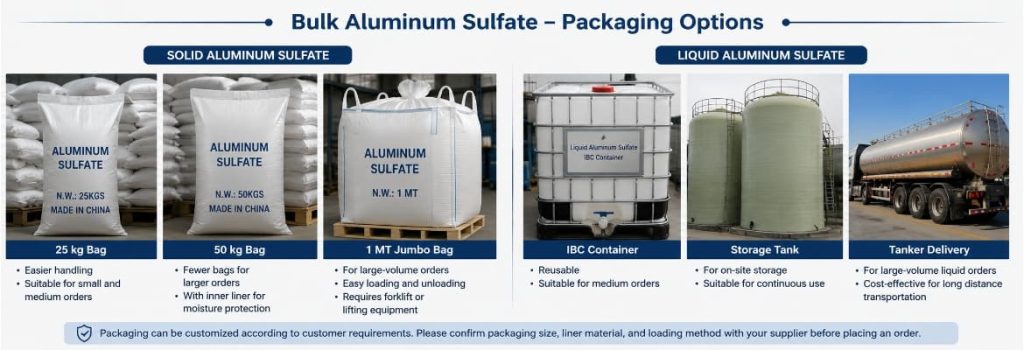
- 25 kg and 50 kg Bags:
25 kg bags are a practical choice for distributors, smaller industrial users, and buyers who need easier manual handling. 50 kg bags can reduce the number of individual bags in larger orders and suit customers with suitable handling equipment. Export packaging often uses woven polypropylene or similar durable bags with an inner liner to provide additional moisture protection.
- 1 MT Jumbo Bags:
For larger-volume purchases, 1 MT jumbo bags can simplify loading, unloading, and warehouse handling. They are commonly used by industrial customers and bulk buyers with forklifts or other lifting equipment. Some suppliers also provide 1–1.2 MT bag options.
- Liquid Aluminum Sulfate:
Liquid aluminum sulfate requires a different logistics setup. Depending on the supplier and destination, buyers may use IBC containers, storage tanks, or tanker delivery. The appropriate option depends on order volume and the customer’s receiving facilities.
For international bulk orders, buyers should confirm the bag size, liner material, packaging strength, and loading method with the supplier before placing the order. This helps protect the product during transportation and makes unloading and storage more efficient.
How to Choose the Right Packaging for Your Aluminum Sulfate Order?
The right packaging depends mainly on your order quantity, handling equipment, and storage conditions. Common bulk options include 25 kg bags, 50 kg bags, and 1 MT jumbo bags. Suppliers may also offer customized packaging for specific requirements.
| Packaging | Best For | Main Advantage |
| 25 kg bags | Small and medium buyers | Easy handling |
| 50 kg bags | Industrial users | More product per bag |
| 1 MT jumbo bags | Large-volume buyers | Less individual handling |
| Liquid bulk | Continuous-use facilities | Direct bulk delivery |
- Order Quantity:
For smaller or medium-sized orders, 25 kg or 50 kg bags can offer a practical balance between handling and shipping efficiency. For larger orders, 1 MT jumbo bags can reduce the number of individual bags and simplify loading and unloading.
- Handling Equipment
Your available equipment also matters. Jumbo bags work well when the warehouse has forklifts or suitable lifting equipment. If workers need to handle bags manually, smaller packages may be more convenient.
- Storage Conditions
Finally, consider how you will store the product after delivery. Solid aluminum sulfate should remain protected from moisture and humidity. Choose packaging with suitable inner liners or moisture protection, especially for long-distance transportation and storage.
In short, the best aluminum sulfate packaging is not simply the largest available option. Buyers should choose the format that fits their order volume, handling system, shipping plan, and warehouse conditions.
What Is the MOQ for Bulk Aluminum Sulfate?
The MOQ (Minimum Order Quantity) for bulk aluminum sulfate can vary from one supplier to another. Product grade, packaging, total order volume, destination, and shipping method can all affect the minimum order quantity. Current supplier listings show common MOQs around 20–25 metric tons, while some products or special grades may require larger quantities.
Trial Orders
For first-time buyers, a smaller trial order can help confirm product quality, packaging, and supplier performance before placing regular bulk orders. However, not every manufacturer accepts small trial quantities, so buyers should confirm the MOQ before requesting a quotation.
Regular Bulk Orders
For distributors, water treatment companies, and industrial users, regular orders often start at 20 MT or more. The final MOQ may depend on the selected grade and packaging, such as 25 kg bags, 50 kg bags, or 1 MT jumbo bags.
Full Container Orders
For international buyers, a full-container order (FCL) can be a practical option for bulk aluminum sulfate. Some suppliers list 20–25 MT as a typical container quantity, although actual loading depends on packaging and loading arrangements.
MOQ varies by supplier, product grade, packaging, and destination. Always confirm the minimum order quantity before placing a bulk aluminum sulfate order or requesting a final quotation.
How Is Bulk Aluminum Sulfate Shipped?
Once you have selected the right packaging and confirmed the order quantity, the next step is to choose a suitable shipping method. For bulk aluminum sulfate, the best option depends mainly on the product form, order volume, packaging, and destination.

Solid Aluminum Sulfate
For solid aluminum sulfate, international shipments usually move as bagged cargo in containers. Common options include 25 kg bags, 50 kg bags, and 1 MT jumbo bags. Buyers can choose FCL (Full Container Load) for regular bulk orders or LCL (Less than Container Load) when the shipment is smaller.
For most regular bulk orders, FCL shipping is more practical. It provides better control over the cargo and avoids combining the product with other shipments. Palletized or floor-loaded cargo may be used depending on the packaging and loading plan.
The actual container loading quantity can vary. Packaging size, pallet use, product density, container type, and loading method all affect the final weight. Therefore, buyers should confirm the loading quantity with the supplier instead of relying on a fixed container capacity.
Liquid Aluminum Sulfate
Liquid aluminum sulfate requires a different logistics setup. Depending on the order and destination, suppliers may arrange tank truck or bulk liquid transportation. Water treatment facilities commonly receive liquid alum directly into dedicated storage tanks. Current water treatment specifications also reference ANSI/AWWA B403 for aluminum sulfate in liquid, ground, or lump form.
Before shipment, buyers should confirm the product form, packaging, destination port, container type, loading method, and shipping terms with the supplier. These details help prevent loading problems and ensure that the selected transportation method matches the receiving facility.
What Should Buyers Know About Aluminum Sulfate Storage?
After bulk aluminum sulfate arrives, proper storage helps maintain product quality and protect the packaging. For solid aluminum sulfate, the main concern is moisture. Store the product in a dry, cool, and well-ventilated warehouse. Keep bags away from rain, water, high humidity, and wet floors.
Aluminum sulfate should also remain in its original packaging whenever possible, with bags kept tightly closed and protected from damage. Safety data for aluminum sulfate recommends dry, cool, and well-ventilated storage and advises keeping containers tightly closed.
For bulk buyers, warehouse handling also matters. Keep the storage area clean and check bags regularly for tears, leaks, moisture, or other damage. Avoid placing damaged bags together with intact stock. If the product arrives with damaged packaging, move it to a suitable container according to your site’s handling procedures. Good ventilation can also help control dust during handling.
In short, aluminum sulfate storage does not require a complex setup, but moisture control and proper packaging management are essential. Before shipment, buyers should confirm the supplier’s storage recommendations and SDS, especially when purchasing large quantities or different product grades.
What Should You Confirm Before Placing a Bulk Aluminum Sulfate Order?
Before placing a bulk aluminum sulfate order, buyers should confirm a few key details with the supplier. This helps avoid problems with packaging, shipping, receiving, and storage after the cargo arrives. Supplier requirements can vary by product grade, destination, and order size.
Product
- Grade and physical form
- Required product specification
- Quality requirements for your application
Packaging
- 25 kg bags, 50 kg bags, or 1 MT jumbo bags
- Palletized or floor-loaded shipment
- Customized packaging, if required
Order
- Required quantity
- MOQ
- Target delivery schedule
- Regular or trial order
Shipping
- Destination port
- FCL or LCL
- Shipping terms
- Container loading requirements
Storage
- Available warehouse capacity
- Moisture protection
- Suitable handling equipment
- Safe and dry storage conditions
Documents
Ask the supplier to confirm the documents required for your shipment, such as:
- COA
- SDS
- TDS
- Packing List
- Commercial Invoice
Confirming these details before placing an order makes the procurement process clearer and helps ensure that the aluminum sulfate arrives in the right quantity, packaging, and condition.
Conclusion
Buying aluminum sulfate in bulk requires more than comparing the product price. Buyers should confirm the right grade, physical form, packaging, MOQ, shipping method, and storage conditions before placing an order. Clear requirements can help reduce loading issues, delivery delays, and unnecessary costs. HOO CHEMTEC supplies aluminum sulfate in flakes, powder, granules, and liquid forms, with packaging options including 25 kg, 50 kg, and 1,000 kg bags.
Request a Bulk Aluminum Sulfate Quote:
Looking for a bulk aluminum sulfate supplier in China? Send HOO CHEMTEC your required grade, quantity, packaging, destination port, application, documents, and target delivery date. Our team can review your requirements and provide a suitable quotation.
Contact HOO CHEMTEC today to discuss your bulk aluminum sulfate order.
FAQ
What packaging options are available for bulk aluminum sulfate?
Bulk aluminum sulfate is commonly packaged in 25 kg bags, 50 kg bags, and 1 MT jumbo bags. Liquid aluminum sulfate is typically delivered via IBC containers, storage tanks, or tanker trucks. The best choice depends on your order volume, handling equipment, and storage conditions.
What is the typical MOQ for bulk aluminum sulfate?
The minimum order quantity (MOQ) for bulk aluminum sulfate generally ranges from 20 to 25 metric tons, though this can vary by supplier, product grade, and packaging. Some suppliers accept smaller trial orders, while full container loads (FCL) are common for regular bulk purchases. Always confirm the MOQ with your supplier before requesting a quote.
How is bulk aluminum sulfate shipped internationally?
Solid aluminum sulfate is usually shipped as bagged cargo in containers, either as Full Container Load (FCL) or Less than Container Load (LCL). Common packaging includes 25 kg bags, 50 kg bags, and 1 MT jumbo bags. Liquid aluminum sulfate requires specialized logistics such as tank trucks or bulk tanker delivery. Confirm the product form, packaging, and destination port with your supplier to select the best shipping method.
What are the recommended storage conditions for aluminum sulfate?
Before ordering, verify the following with your supplier:
- Product: Grade, physical form (flake, powder, granule, or liquid), and specification.
- Packaging: Bag size (25 kg, 50 kg, 1 MT jumbo), palletized or floor-loaded.
- Order: Quantity, MOQ, delivery schedule, trial or regular order.
- Shipping: Destination port, FCL or LCL, shipping terms, container loading requirements.
- Documents: COA, SDS, TDS, packing list, commercial invoice.
Confirming these details helps avoid delays, loading issues, and unexpected costs.