Published by HOO CHEMTEC Water Treatment Specialists
The global aluminum sulphate market is experiencing a noticeable price increase in 2026. For municipal water treatment plants, industrial wastewater operators, distributors, and chemical importers, rising aluminum sulphate costs are creating additional pressure on operating budgets and procurement planning.
While many buyers focus on the final quoted price, the reality is that aluminum sulphate pricing is influenced by multiple upstream factors, including sulfur, sulfuric acid, bauxite, energy, logistics, and environmental compliance costs.
More importantly, understanding these market drivers can help buyers make smarter sourcing decisions and reduce overall procurement expenses.
Why Are Aluminum Sulphate Prices Rising in 2026? (Quick Answer)
Aluminum sulphate prices are increasing due to five major factors:
- Rising sulfur prices are increasing sulfuric acid production costs.
- Higher bauxite costs are affecting aluminum-based raw material supply.
- Elevated energy and utility expenses continue to impact manufacturing.
- Freight and logistics costs remain volatile in global markets.
- Environmental compliance requirements are increasing production costs.
For water treatment buyers, the most effective response is not simply waiting for prices to fall, but optimizing procurement strategies, supplier selection, and purchasing schedules.
Expert Insight from HOO CHEMTEC
As a supplier of industrial water treatment chemicals serving customers across Asia, the Middle East, Africa, South America, and Europe, HOO CHEMTEC has observed growing concerns regarding aluminum sulphate pricing throughout 2026.
Many distributors, EPC contractors, and municipal water treatment operators have reported increasing pressure to control chemical treatment costs while maintaining stable supply.
Based on market observations and customer inquiries, several upstream cost drivers continue to shape the current aluminum sulphate price trend.
Why Aluminum Sulphate Prices Are Increasing
The current aluminum sulphate price trend is not driven by short-term speculation. Instead, it reflects a chain reaction occurring throughout the global chemical supply network.
The Cost Chain Behind Rising Aluminum Sulphate Prices
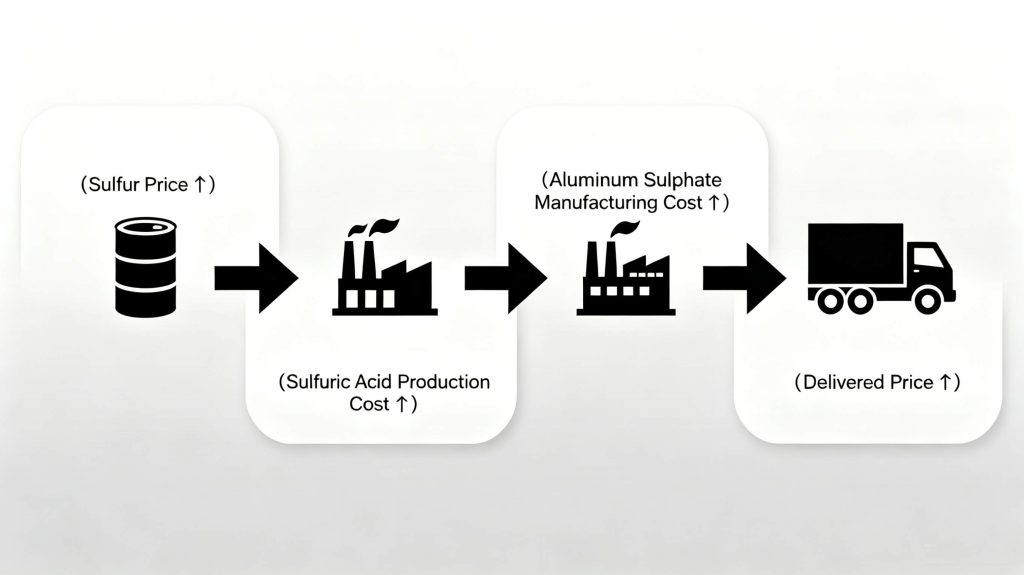
Higher Sulfur Prices
↓
Higher Sulfuric Acid Production Costs
↓
Increased Aluminum Sulphate Manufacturing Costs
↓
Higher Delivered Aluminum Sulphate Prices
This supply-chain relationship explains why many aluminum sulphate suppliers have adjusted prices during the first half of 2026.
1. Rising Sulfur Prices Are Increasing Sulfuric Acid Costs
One of the most significant factors behind aluminum sulphate price increases is the rising cost of elemental sulfur.
Sulfuric acid is a critical raw material in aluminum sulphate manufacturing. Since most industrial sulfuric acid is produced through sulfur-burning processes, fluctuations in sulfur prices directly impact sulfuric acid production costs.
Several factors have contributed to sulfur market volatility:
- Changes in refinery sulfur recovery output
- Fluctuating fertilizer industry demand
- Supply disruptions in major sulfur-exporting regions
- Geopolitical uncertainties affecting commodity markets
As sulfur prices increase, sulfuric acid producers face higher operating costs, which are ultimately reflected in aluminum sulphate pricing.
2. Bauxite Supply Constraints Continue to Impact Production Costs
Bauxite remains the primary aluminum-containing raw material supporting the broader aluminum chemical supply chain.
In recent years, bauxite production has faced pressure from:
- Environmental restrictions on mining operations
- Reduced extraction capacity in some producing regions
- Rising labor and operational expenses
- Growing demand from aluminum processing industries
These factors have increased the baseline production costs of many aluminum-based chemicals, including aluminum sulphate.
3. Energy Costs Remain Elevated Across Manufacturing Regions
Aluminum sulphate production is energy intensive.
Manufacturers require substantial amounts of:
- Electricity
- Thermal energy
- Drying capacity
- Water treatment utilities
Although energy markets have become more stable compared with previous years, utility costs remain above historical averages in many manufacturing regions.
As a result, energy continues to be a significant contributor to aluminum sulphate production costs.
4. Logistics and Freight Costs Continue to Affect Delivered Prices
Transportation costs remain an important factor affecting aluminum sulphate prices, particularly for export markets.
Buyers continue to face cost pressures from:
- Ocean freight fluctuations
- Port handling charges
- Inland transportation expenses
- Packaging material costs
- Chemical transportation compliance requirements
For importers purchasing full container loads, freight costs can significantly influence total landed cost calculations.
5. Environmental Compliance Costs Are Increasing
Environmental regulations continue to influence chemical manufacturing worldwide.
Many aluminum sulphate producers have invested in:
- Emission reduction systems
- Wastewater treatment facilities
- Environmental monitoring technologies
- Cleaner production processes
While these investments support sustainable manufacturing, they also increase operating expenses and contribute to higher product pricing.
Which Industries Are Most Affected by Rising Aluminum Sulphate Prices?
Because aluminum sulphate remains one of the world’s most widely used coagulants, rising prices impact numerous industries.
Municipal Water Treatment
Water treatment facilities rely on aluminum sulphate for coagulation, turbidity reduction, and clarification processes.
Even modest price increases can significantly affect annual treatment budgets.
Industrial Wastewater Treatment
Manufacturing facilities use aluminum sulphate to remove suspended solids, phosphorus, and contaminants from wastewater streams.
Pulp and Paper Industry
Paper manufacturers use aluminum sulphate in sizing and retention applications, making them sensitive to raw material price fluctuations.
Textile Processing
Textile plants frequently utilize aluminum sulphate during dyeing operations and wastewater treatment processes.
Mining and Mineral Processing
Mining operations depend on aluminum sulphate for clarification and water recycling systems.
How Water Treatment Buyers Can Reduce Aluminum Sulphate Procurement Costs
Although market prices are increasing, buyers can take proactive steps to manage procurement expenses and improve supply stability.
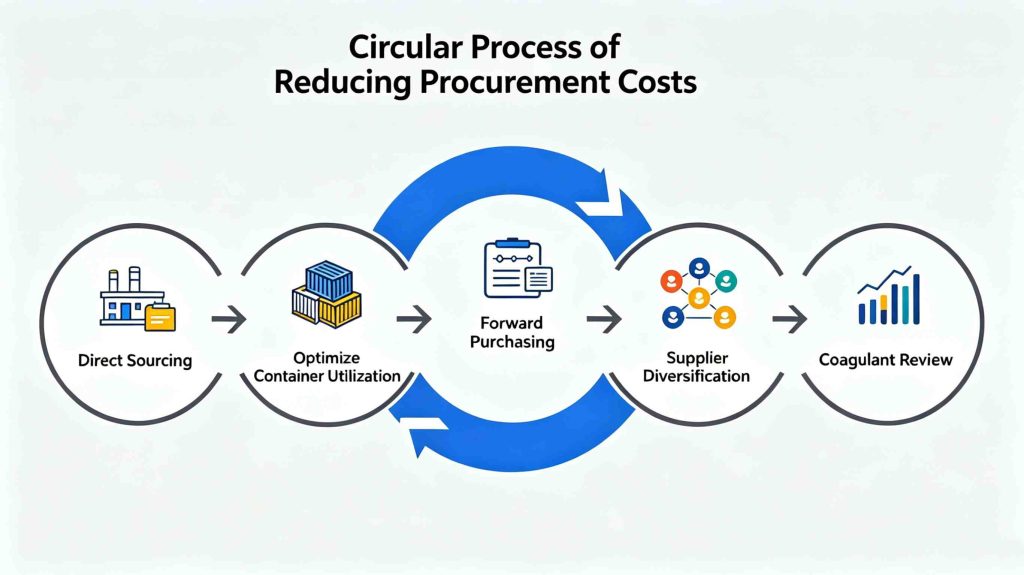
Source Directly from Manufacturers
Purchasing directly from experienced aluminum sulphate manufacturers can reduce intermediary costs and improve pricing transparency.
Direct sourcing often provides:
- Better price stability
- Faster communication
- More flexible supply arrangements
- Improved technical support
Optimize Container Utilization
Shipping efficiency remains one of the easiest ways to reduce total procurement costs.
Full-container-load purchases typically offer lower per-ton costs compared with partial shipments.
Secure Supply Through Forward Purchasing
Buyers with predictable consumption patterns may benefit from advance purchasing agreements or long-term supply contracts.
This approach helps reduce exposure to sudden market fluctuations.
Diversify Supplier Networks
Maintaining relationships with multiple qualified suppliers can reduce supply chain risks during periods of market volatility.
Review Coagulant Selection
In certain applications, buyers may evaluate alternative coagulants such as Poly Aluminum Chloride (PAC).
Although aluminum sulphate remains the preferred solution for many treatment processes, comparing treatment performance and total operating costs can sometimes identify optimization opportunities.
Aluminum Sulphate vs PAC: Which Offers Better Value During Rising Prices?
As aluminum sulphate prices increase, some buyers consider switching to PAC.
The answer depends on treatment objectives, water quality, dosage requirements, and operating conditions.
In general:
| Factor | Aluminum Sulphate | PAC |
|---|---|---|
| Initial Product Cost | Lower | Higher |
| Dosage Requirement | Higher | Lower |
| Sludge Production | Higher | Lower |
| Treatment Efficiency | Good | Excellent |
| pH Impact | Greater | Lower |
For many municipal and industrial systems, PAC may reduce overall treatment costs despite having a higher unit price.
However, a complete evaluation should consider dosage rates, sludge handling costs, and treatment performance.
Market Outlook: Will Aluminum Sulphate Prices Continue Rising?
While future market conditions remain uncertain, several factors suggest that aluminum sulphate prices may remain relatively firm throughout 2026:
- Continued sulfur market volatility
- Tight bauxite supply conditions
- Elevated energy costs
- Ongoing logistics challenges
- Increasing demand from water treatment industries
Buyers should continue monitoring market developments and maintain flexible procurement strategies to ensure stable supply.
Why Partner with HOO CHEMTEC?
HOO CHEMTEC supplies aluminum sulphate and other water treatment chemicals to customers worldwide.
Our team supports:
- Municipal water treatment plants
- Industrial wastewater treatment facilities
- Chemical distributors
- EPC contractors
- Manufacturing industries
We provide:
- Stable product quality
- Competitive export pricing
- Flexible packaging options
- Technical application support
- Global logistics solutions
Whether you require liquid aluminum sulphate, powder aluminum sulphate, or customized industrial grades, our team can help you develop a reliable sourcing strategy in today’s changing market.
Request the Latest Aluminum Sulphate Quotation
Looking for a reliable aluminum sulphate manufacturer and exporter from China?
Contact HOO CHEMTEC today to receive:
- Latest aluminum sulphate prices
- Product specifications
- Export packaging details
- Shipping solutions
- Technical support for water treatment applications
Our specialists are ready to help you secure a stable supply while optimizing procurement costs.
Why has the aluminum sulphate price increased significantly in 2026?
The increase in aluminum sulphate prices during 2026 is mainly driven by rising sulfur and sulfuric acid costs, higher bauxite prices, increased energy expenses, freight volatility, and stricter environmental compliance requirements.
Since sulfuric acid is a key raw material in aluminum sulphate production, fluctuations in sulfur markets directly affect manufacturing costs. Additionally, transportation and packaging expenses continue to influence the final delivered price for international buyers.
Is PAC a better alternative when aluminum sulphate prices are rising?
Not necessarily.
Poly Aluminum Chloride (PAC) generally has a higher unit price than aluminum sulphate, but it often requires a lower dosage and produces less sludge.
PAC may provide better overall economics in applications where:
- Raw water turbidity fluctuates significantly
- Sludge disposal costs are high
- Treatment efficiency is a priority
However, aluminum sulphate remains a cost-effective and proven coagulant for many municipal and industrial water treatment systems.
How can I reduce aluminum sulphate procurement costs without compromising quality?
The most effective ways to reduce procurement costs include:
- Purchasing directly from manufacturers
- Ordering full container loads (FCL)
- Signing long-term supply agreements
- Comparing suppliers based on total landed cost rather than unit price
- Optimizing dosage through jar testing and process control
For many water treatment plants, reducing overdosing can generate larger savings than negotiating a lower product price.