Surfactants are the essential cleaning agents in almost every product that foams or cleans. From the lather in your shampoo to the suds in your dish soap, they make everyday cleaning possible.
This article will explore six of the most common surfactants: SLES, SLS, LABSA, CMEA, AOS, and CAB. Understanding their unique properties helps you make informed choices, whether you’re a formulator or a curious consumer.
Let’s dive into the world of these key foaming agents and cleansing agents.
Surfactant Basics
Surfactants are the workhorses of cleaning. The name is a short form of “surface-active agents.” Think of them as tiny molecules with a split personality. One end is hydrophilic (water-loving), and the other is hydrophobic (water-hating but oil-loving). This unique structure is the key to their function.
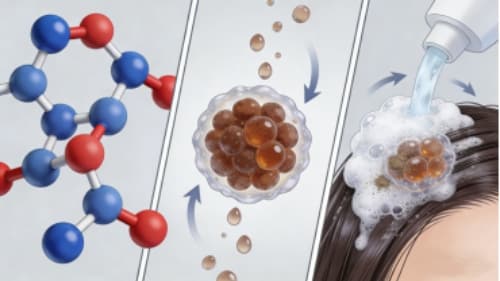
Their main job is to lower surface tension, allowing water to spread and wet surfaces easily. When you wash, the hydrophobic tails surround grease and dirt, while the hydrophilic heads face the water. This forms structures called micelles, trapping the soil so water can rinse it away. This core action is what provides detergency, or cleaning power.
Beyond cleaning, surfactants also enable emulsification (mixing oil and water) and create foam by trapping air in liquid films.
In short, these properties make surfactants indispensable. Now, let’s look at the six most common types and their specific roles.
Deep Dive into the 6 Key Surfactants
While all surfactants share the same basic principle, their specific properties vary greatly. The choice depends on the desired balance of cleaning power, mildness, foam, and cost. Here is a detailed look at formulators today commonly use these six surfactants.
1. Sodium Laureth Sulfate (SLES)
What it is: Sodium Laureth Sulfate, commonly called SLES, is a widely used anionic surfactant. It is produced by ethoxylating lauryl alcohol before sulfation, which makes it milder than its close relative, SLS.
Key Properties: SLES is a relatively mild surfactant that produces high foam.. It creates abundant, stable lather. It is an excellent viscosity booster, helping to give shampoos and body washes a rich, creamy consistency.
Common Applications: It is the most common shampoo base and a primary cleanser in body washes, hand soaps, and bubble baths.
Pros & Cons:
Pros: High foam, good cleansing, mild on skin, cost-effective, and improves product thickness.
Cons: Its production may rely on palm oil, raising sustainability concerns, and the ethoxylation process can generate trace impurities, though strict purification typically controls this.
2. Sodium Lauryl Sulfate (SLS)
What it is: Sodium Lauryl Sulfate (SLS) is a classic anionic surfactant. It is a strong, efficient cleanser made from lauryl alcohol.
Key Properties: SLS is a strong cleanser and degreaser. It produces copious, high foaming lather. However, it can be a potential irritant to skin and eyes, especially with prolonged contact, as it can strip the skin’s natural oils.
Common Applications: Used in products designed for deep cleaning, such as clarifying agent in shampoos, heavy-duty hand soaps, industrial cleaners, and car wash formulas.
Pros & Cons:
Pros:Excellent and powerful cleaning, very high foam, very effective at removing oil and grease, relatively inexpensive.
Cons:Can be drying and irritating, not suitable for sensitive skin or frequent use on hair, harsher than SLES.
3. Linear Alkylbenzene Sulfonic Acid (LABSA)
What it is: Linear Alkylbenzene Sulfonic Acid (LABSA) is a powerful anionic surfactant in acid form, often neutralized to create salts like LAS (Linear Alkylbenzene Sulfonate) in final products.
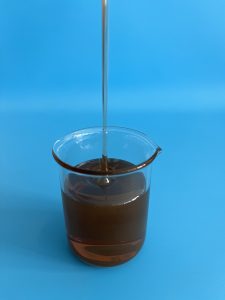
Key Properties: It is known for its very high detergency and effectiveness against grease. It is a strong, cost-effective workhorse surfactant.
Common Applications: Primarily an industrial cleaner and the main active ingredient in household and laundry detergent powders and liquids, dishwashing liquids, and hard surface cleaners.
Pros & Cons:
Pros:Extremely effective cleaner, very cost-effective, stable, and excellent for heavy-duty tasks.
Cons:Can be very harsh on skin, not used in personal care products meant for direct skin contact (like body wash), requires careful handling in its acidic form.
4. Cocamide MEA (CMEA)
What it is: Cocamide MEA, or coconut monoethanolamide, is a non-ionic surfactant derived from coconut oil and monoethanolamine. It is not typically a primary cleanser.
Key Properties: Its main roles are as a foam booster and viscosity enhancer. It stabilizes and thickens the lather created by other surfactants, making it creamier and longer-lasting. It is considered mild.
Common Applications: Used as a secondary ingredient in shampoos, liquid soaps, and bubble baths to improve foam quality and product thickness.
Pros & Cons:
Pros:Greatly improves foam stability and creaminess, thickens formulations, is mild, and is often naturally derived.
Cons:Very poor cleanser on its own, requires combination with anionic surfactants to function effectively.
5. Sodium Alpha-Olefin Sulfonate (AOS)
What it is: Sodium Alpha-Olefin Sulfonate (AOS) is a high-performance anionic surfactant.
Key Properties: AOS is valued for its excellent foaming that is rich and stable. It shows good salt tolerance and hard water stability, meaning it performs well in different water conditions. It is considered mild, especially compared to SLS.
Common Applications: Found in mild personal care products like baby shampoos, sensitive skin body washes, and high-quality facial cleansers. Also used in some detergents.
Pros & Cons:
Pros:Mild, rich and stable foam, performs well in hard water, biodegradable.
Cons:Generally more expensive than SLES or SLS.
6. Cocamidopropyl Betaine (CAB)
What it is: Cocamidopropyl Betaine (CAB) is an amphoteric surfactant, meaning it can carry both positive and negative charges depending on the pH. It is derived from coconut oil.
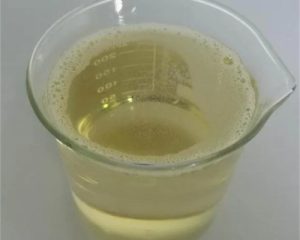
Key Properties: It is very mild and gentle on the skin and eyes. It is a superb foam booster and viscosity modifier that helps create a creamy lather. A key benefit is that it reduces irritation from stronger anionic surfactants like SLES/SLS.
Common Applications: A staple in “no-tear” baby shampoos, mild facial cleansers, and sensitive skin formulations. Almost universally used alongside SLES in shampoos and shower gels to improve mildness and lather.
Pros & Cons:
Pros:Extremely mild, excellent foaming and thickening, reduces overall formula irritation, good compatibility with all surfactant types.
Cons:More expensive than some anionics, not a strong primary cleanser by itself.
Now that we understand each surfactant individually, the next step is to compare them side-by-side.
Surfactants Comparative Analysis
To make an informed choice, it’s crucial to compare these surfactants side-by-side. The table below summarizes their key characteristics across several dimensions.
| Name | Ionic Type | Cleaning Power | Mildness | Foam Profile | Primary Role | Price Range | Typical Application |
| Sodium Lauryl Sulfate (SLS) | Anionic | Very Strong | Low (Most Potentially Irritating) | Very High, Dense | Primary Cleanser / Degreaser | High | Clarifying Shampoos, Industrial Cleaners |
| Linear Alkylbenzene Sulfonic Acid (LABSA) | Anionic | Very Strong | Low (Harsh on Skin) | High, Dense | Primary Cleanser / Degreaser | Low | Laundry Detergents, Household Cleaners |
| Sodium Laureth Sulfate (SLES) | Anionic | Strong | Moderate | Very High, Dense | Primary Cleanser, Viscosity Booster | Medium | Shampoos, Body Washes, Hand Soaps |
| Sodium Alpha-Olefin Sulfonate (AOS) | Anionic | Moderate-Strong | Moderate-High | Excellent, Stable & Rich | Primary Cleanser (especially for mild formulas) | Medium-High | Baby Shampoos, Sensitive Skin Washes |
| Cocamidopropyl Betaine (CAB) | Amphoteric | Mild-Moderate | Very High (Gentlest) | High, Creamy (Booster) | Foam Booster, Viscosity Modifier, Irritation Reducer | Low | “No-Tear” Formulas, Mild Washes, All Product Types |
| Cocamide MEA (CMEA) | Non-ionic | Very Weak (Not a primary cleanser) | High | Excellent Stabilizer & Thickener | Foam Booster, Viscosity Enhancer, Stabilizer | Medium | Shampoos, Soaps (as a secondary agent) |
Key Insights from the Comparison:
The Balance Between Cleaning Power and Mildness:
The table clearly shows the inverse relationship. SLS and LABSA are at the strong, potentially irritating end, making them suitable for heavy-duty cleaning but not for sensitive skin.
On the opposite end, CAB and CMEA are the most mild, with CAB also actively reducing irritation from other surfactants.
SLES and AOS offer a middle ground, providing effective cleaning with significantly better mildness, with AOS being the gentler of the two.
The Link Between Price and Performance:
Cost is a major factor in formulation. While CAB is known as a high-performance, very mild ingredient, it is often a cost-effective choice for formulators due to its multi-functionality (foam boosting, thickening, irritation reduction).
Conversely, SLS, despite its harshness, can command a higher price in certain grades and applications due to its unparalleled raw cleaning efficiency and purity requirements for specific uses.
Synergy in Formulation–Why They Are Rarely Used Alone:
The most effective personal care products are built on synergy.
A typical mild shampoo or body wash formula might use SLES as the primary, cost-effective cleanser, then add CAB to instantly improve mildness, boost lather creaminess, and thicken the product.A small amount of CMEA could be added to further refine and stabilize the foam.
This approach balances performance, skin feel, and cost, demonstrating why understanding these ingredients as a toolkitis more important than seeing them in isolation.
How to Choose and Use Surfactants in Formulations
Selecting the right surfactant depends on your product’s goal: deep cleaning, mildness, rich lather, or cost. The key is synergy—combining ingredients to balance performance. Here are essential formulation tips:
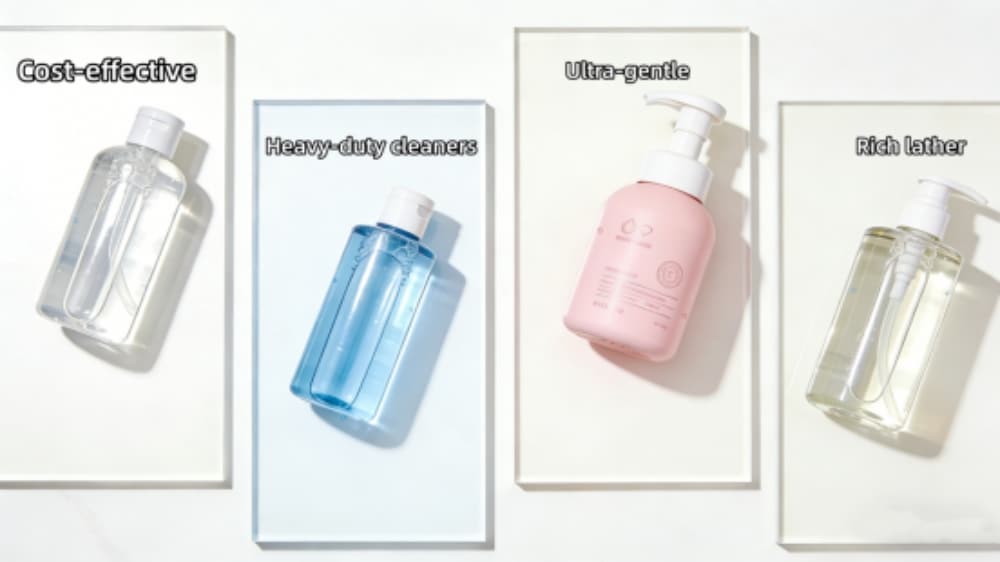
For a cost-effective formula like a standard mild cleanser, the classic SLES + CAB duo is perfect. SLES cleanses and foams, while CAB boosts viscosity and reduces irritation. Add a little CMEA for a denser foam profile.
For heavy-duty cleaners (floor or toilet cleaners), use LABSA as the primary powerhouse for its strong detergency.
For ultra-gentle products (baby shampoo or sensitive skin cleansers), use AOS as the primary surfactant or CAB as a co-cleanser to maximize mildness.
To create a rich, creamy lather in a shower gel, start with SLES or SLS as the base, then add both CAB and CMEA. CAB improves mildness and creaminess, while CMEA stabilizes the foam.
By understanding their roles, you can mix these ingredients to achieve the perfect balance of clean, feel, and safety.
Conclusion
In summary, there is no single “best” surfactant. The key to effective formulation science is understanding each ingredient’s properties—like the strong cleansing of SLS, the mildness of CAB, or the rich foam of AOS—and combining them to create the optimal balance for your product.
As a trusted manufacturer and exporter, HOO CHEMTEC supplies high-quality surfactants like SLES, CAB, AOS, and more. We help you make the informed choice to build better, smarter formulations. Contact us to find the perfect ingredients for your next project.
FAQ
Are SLS and SLES harmful? How should I view them rationally?
In correct concentrations within rinse-off products, SLS and SLES are considered safe for most people by regulatory bodies. However, SLS can be drying and irritating, especially for sensitive skin or with prolonged contact. SLES is generally milder. The key is formulation—they are often combined with mild surfactants like CAB to reduce potential irritation. It’s about suitability, not inherent danger.
What does “Sulfate-Free” shampoo mean, and what are common alternatives?
“Sulfate-Free” typically means the product is free from SLS and SLES. Common alternatives used as primary cleansers in such formulas include Sodium Alpha-Olefin Sulfonate (AOS), Cocamidopropyl Betaine (CAB), Amino Acid-based Surfactants (e.g., Sodium Cocoyl Glutamate), and other mild anionics.
How do products with “Amino Acid Surfactants” differ from these?
Amino acid surfactants (e.g., glutamates, glycinates) are generally the mildest class. They are very gentle, skin-friendly, and often have a higher pH compatibility with skin. The main differences are a significantly higher price point and typically a lower, creamier foam compared to surfactants like SLES or AOS.
How do I choose the right surfactant system for my product?
Define your product’s primary goal. For strong cleansing, choose SLS or LABSA. For mildness, build around AOS or CAB. For a cost-effective all-rounder, use SLES as a base. Then, improve the foam and feel by adding CAB (for creaminess and mildness) and/or CMEA (for foam stability). Always consider synergy and test your final blend.