Calcium hypochlorite, with its stable available chlorine content, high disinfection efficiency, and suitability for industrial-scale applications, has become an important disinfection solution in water treatment systems across multiple industries.
As a commonly used solid chlorine disinfectant, it controls bacterial, algal, and other microbial contamination by releasing active chlorine.
In industrial environments, water quality stability directly impacts equipment operating efficiency and system reliability. For example, microbial proliferation in circulating cooling water can lead to biofilm formation, while industrial wastewater requires effective disinfection to reduce microbial load.
Therefore, industrial users not only focus on disinfection effectiveness but also value product stability, ease of operation, and supply reliability. Understanding the properties, mechanism of action, and application conditions of Calcium Hypochlorite helps companies optimize their water treatment solutions.
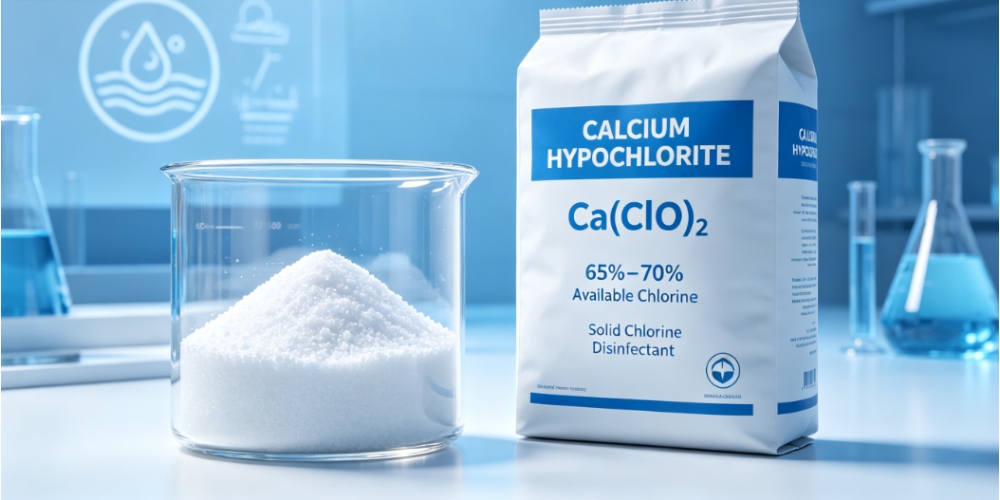
What is calcium hypochlorite and its role in water treatment?
Chemical Properties and Disinfection Characteristics
Calcium hypochlorite, with the chemical formula Ca(ClO)₂, is a solid chlorine disinfectant. When dissolved in water, it releases hypochlorous acid (HOCl), which is the main active ingredient responsible for oxidative disinfection.
Compared to other disinfection methods, Calcium Hypochlorite typically has a higher available chlorine content, generally around 65%-70%, with the exact figure depending on product specifications and manufacturing process.
Available chlorine content directly affects its oxidizing capacity and is a crucial indicator of disinfection efficiency.
In industrial water treatment systems, maintaining appropriate residual chlorine levels helps inhibit bacterial and algal growth, reducing the risk of microbial contamination. However, the actual dosage needs to be adjusted based on water quality conditions, system size, and pollution load.
Why Industries Choose Solid Chlorine Disinfectants
Industrial water treatment requires disinfectants not only to have excellent bactericidal capabilities but also to meet the practical needs of transportation, storage, and on-site operation.
For long-distance transportation, water treatment facilities in remote areas, and small to medium-sized industrial systems, solid chlorine disinfectants offer better storage stability and application flexibility.
Compared to some liquid disinfectants, Calcium Hypochlorite is easier to transport and manage, and allows for precise dosing based on varying water volume requirements.
Furthermore, the solid form of the product is easier to integrate with automated dosing systems, enabling industrial users to adjust operating procedures according to changes in water quality and improving the stability of the water treatment process.
Why does calcium hypochlorite work for industrial disinfection?
Release of Hypochlorous Acid and Oxidation Mechanism
When Calcium Hypochlorite dissolves in water, it releases hypochlorous acid (HOCl). The main reaction process can be represented as: Ca(ClO)₂ → HOCl + Ca²⁺. HOCl has strong oxidizing power, capable of penetrating microbial cell structures and inactivating bacteria and other microorganisms by oxidizing proteins, disrupting enzyme systems, and affecting cellular metabolism.
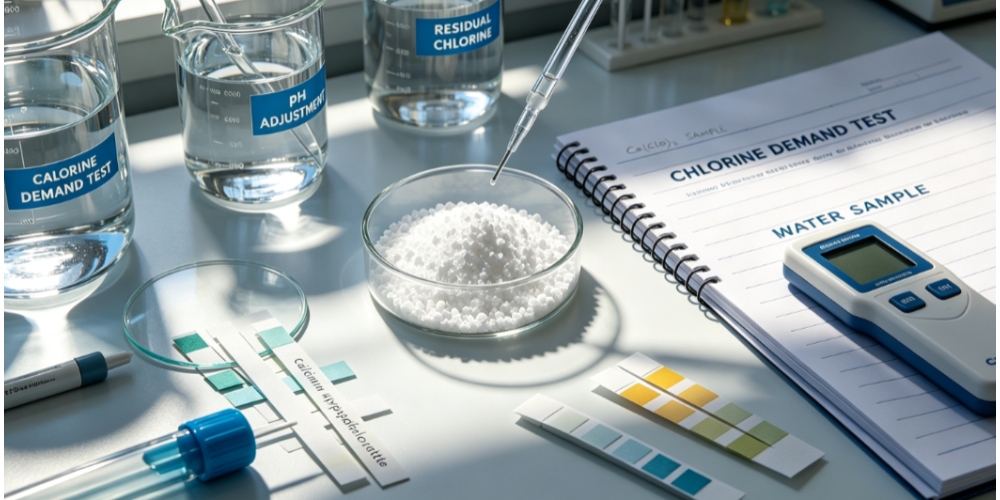
However, the disinfection effect of Calcium Hypochlorite is not solely dependent on the dosage but is also affected by water quality conditions. For example, pH affects the ratio between HOCl and hypochlorite ions (OCl⁻), while organic load consumes available chlorine, reducing actual disinfection capacity.
Therefore, industrial systems typically require adjustments to disinfection protocols based on chlorine demand, water quality testing results, and operating conditions.
Maintaining Microbial Control in Industrial Water Systems
Microbial control is crucial for ensuring equipment efficiency and water quality stability during the long-term operation of industrial water systems.
For example, in cooling tower systems, the high temperature and continuous circulation of circulating water easily create an environment conducive to bacterial and algal growth. The risk of microorganisms such as Legionella requires continuous and effective disinfection management.
Calcium Hypochlorite can help maintain disinfection levels in the water, reduce microbial accumulation and biofilm formation, thereby mitigating problems such as equipment clogging, decreased heat exchange efficiency, and increased system maintenance frequency.
In industrial wastewater treatment, the appropriate addition of Calcium Hypochlorite can reduce the microbial load in the effluent, improve the stability of treated water quality, and meet the disinfection requirements of different application scenarios.
How does calcium hypochlorite support different industries?
Cooling Water Treatment in Manufacturing Facilities
Circulating cooling water systems in manufacturing plants often require long-term continuous operation. Increased temperatures, a conducive circulation environment, and nutrient accumulation can easily promote the growth of bacteria and algae.
In these applications, Calcium Hypochlorite can be used for periodic or continuous disinfection, helping to control microbial numbers and reduce biofilm formation. By reducing the risk of microbial contamination, problems such as pipe blockage, equipment contamination, and decreased heat exchange efficiency can be reduced.
For industrial cooling systems requiring stable operation, the appropriate use of Calcium Hypochlorite helps maintain water quality balance and improve equipment operational reliability.
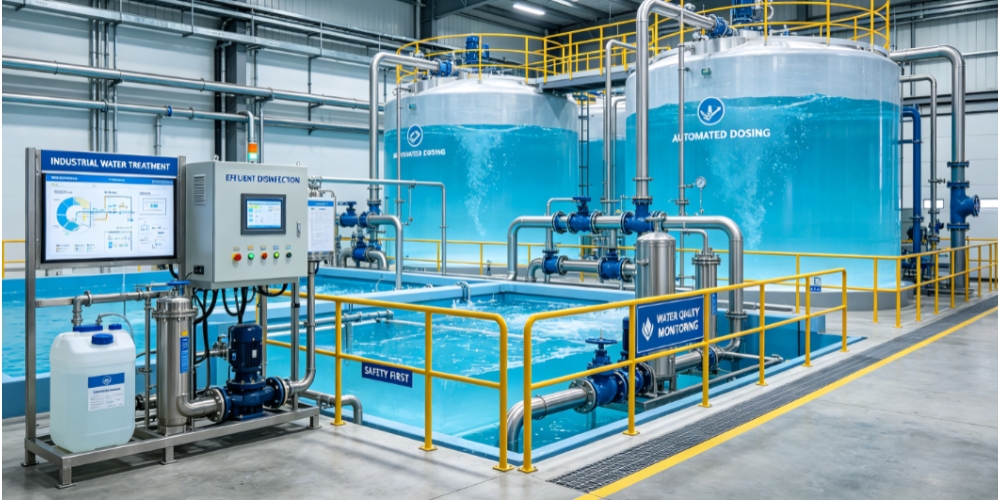
Municipal and Industrial Wastewater Disinfection
In municipal wastewater and industrial wastewater treatment processes, disinfection is often a crucial step. Even after biological treatment, water may still contain a certain number of microorganisms, requiring further reduction of the microbial load to meet discharge or reuse requirements.
Calcium hypochlorite inactivates residual microorganisms by releasing active chlorine, helping to improve the stability of effluent quality. In practical applications, the disinfection effect usually requires adjustment of the dosage concentration and contact time based on water quality conditions.
For industrial wastewater systems with high pollution loads, a more reasonable disinfection plan needs to be developed by comprehensively considering organic matter content, residual chlorine requirements, and treatment objectives.
Food Processing and Beverage Water Systems
The food processing and beverage industry has high requirements for water quality safety and hygiene control. Production processes involve raw material washing water, equipment cleaning water, and some process water, all of which require effective control of microbial contamination.
Calcium hypochlorite provides a stable and easy-to-manage disinfection method that can help companies reduce the risk of bacterial contamination and maintain consistent production water quality.
Due to the high controllability requirements of the food industry’s disinfection process, companies typically need to adjust the dosage concentration and treatment process according to water quality test results to ensure that the disinfection effect meets production needs.
Aquaculture and Agricultural Water Management
In the fields of aquaculture and agricultural water management, bacteria, algae, and other pollutants in the water can affect the aquaculture environment and water quality.
Calcium hypochlorite can be used to control the number of microorganisms in water bodies and improve water quality stability. For example, in aquaculture systems, proper disinfection can reduce the risk of disease transmission; in agricultural applications, it can assist in the treatment of irrigation water, reducing the impact of water source pollution.
However, because aquaculture and agricultural water bodies have a certain degree of ecological sensitivity, the dosage needs to be controlled according to water conditions during actual use to avoid affecting the normal ecological balance.
What factors affect calcium hypochlorite performance?
Water Quality Conditions
Water quality conditions are one of the important factors affecting the disinfection effect of Calcium Hypochlorite. Among them, pH value directly affects the proportion of different chlorine-active substances in the water.
Generally, a higher proportion of HOCl has stronger disinfection activity, while pH changes may reduce the actual effect of available chlorine. Therefore, in industrial water treatment systems, water quality parameters need to be monitored regularly, and operating strategies adjusted according to changes.
Organic Matter
Organic matter in the water consumes available chlorine, reducing the actual disinfection capacity of Calcium Hypochlorite.
When industrial circulating water or wastewater has a high organic load, an additional chlorine demand needs to be considered; otherwise, the expected microbial control effect may not be achieved.
Therefore, in highly polluted application environments, companies typically need to optimize disinfection solutions by combining COD, microbial test results, and residual chlorine data.
Dosage Control and Contact Time
Disinfection effectiveness depends not only on the Calcium Hypochlorite product itself but also on on-site operation and management.
Appropriate dosage, thorough mixing, sufficient contact time, and stable water flow conditions all affect the final treatment effect. Insufficient dosage may fail to effectively control microorganisms; while excessive dosage may increase operating costs and affect subsequent water treatment processes.
Therefore, industrial users typically adjust their dosing plans dynamically based on system scale, water quality changes, and operational objectives.
Product Quality and Manufacturing Consistency
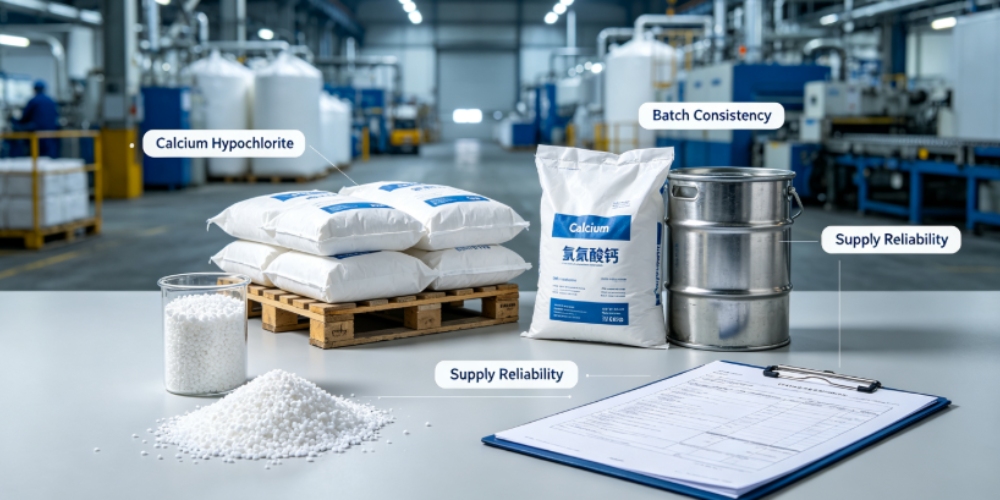
In addition to application conditions, product quality is also a crucial factor affecting long-term disinfection effectiveness.
When selecting a Calcium Hypochlorite supplier, industrial users typically need to focus on available chlorine stability, product purity, batch consistency, and storage stability. These factors directly affect the reliability of the product during long-term transportation and use.
HOO CHEMTEC focuses on providing reliable Calcium Hypochlorite solutions for industrial customers, supporting consistent product quality and supply capability for water treatment applications.
How to use calcium hypochlorite safely?
Storage and Handling Requirements
Calcium Hypochlorite has strong oxidizing properties; therefore, it must be stored and transported in accordance with standardized safety management requirements.
The product should be stored in a dry, well-ventilated environment, avoiding high temperatures, direct sunlight, and humid conditions. It should also be kept away from acidic substances, organic materials, and other incompatible chemicals to prevent unnecessary chemical reactions.
For industrial users, proper storage not only maintains the effective chlorine stability of Calcium Hypochlorite but also helps reduce on-site management risks.
Operational Safety During Water Treatment
When using Calcium Hypochlorite in industrial water treatment sites, it must be added appropriately according to system requirements and water quality conditions.
Operators should wear appropriate personal protective equipment and configure and add the product according to the prescribed ratio. Simultaneously, regular monitoring of residual chlorine levels, water quality changes, and disinfection effectiveness is necessary to ensure the treatment process remains under control.
Standardized operating procedures help companies fully leverage the disinfection performance of Calcium Hypochlorite while reducing safety risks during chemical use.
Conclusion
Calcium Hypochlorite is a crucial solution for industrial water treatment and disinfection applications. With its stable effective chlorine release capacity, highly efficient oxidation properties, and ease of storage and use, it meets the microbial control needs of various industries, including manufacturing, wastewater treatment, food processing, and aquaculture.
However, actual disinfection effectiveness depends not only on the product itself but also on factors such as water quality conditions, dosing management, contact time, and product quality. Therefore, industrial users need to select appropriate treatment solutions based on their specific application environment and ensure long-term operational effectiveness through scientific management.
For companies, choosing a reliable Calcium Hypochlorite supplier and establishing reasonable usage and monitoring procedures are crucial foundations for achieving stable water treatment results.
Calcium Hypochlorite continues to support industrial water treatment and disinfection applications by providing an efficient and manageable solution for microbial control.
What is Calcium Hypochlorite used for in industrial water treatment?
Calcium Hypochlorite is mainly used for water disinfection, helping control bacteria, algae, and other microorganisms in industrial water systems such as cooling towers, wastewater treatment facilities, and process water applications.
How does Calcium Hypochlorite disinfect water?
Calcium Hypochlorite releases hypochlorous acid (HOCl) when dissolved in water. HOCl works as an effective oxidizing agent that destroys microorganisms and helps maintain stable water quality.
What factors affect the performance of Calcium Hypochlorite?
Its performance is affected by factors such as water pH, organic matter levels, dosage, contact time, and product quality. Proper control of these conditions helps achieve better disinfection results.