
In water treatment, EDTA is the cornerstone chelating agent—vital for binding metal ions, preventing scale, and keeping systems running reliably. Yet when businesses buy EDTA, many fixate solely on EDTA price, overlooking a hidden danger: a mere 2% purity gap can trigger massive product returns, downtime, and six-figure losses. This article reveals how to avoid these traps and turn EDTA procurement into a profit driver.
How a 2% Purity Gap Drains Your Budget
That initial “cheaper” EDTA price seems tempting. But on a 10,000-ton production line, a 2% purity drop isn’t a discount—it’s a profit leak disguised as a bargain. Here’s the real cost breakdown:
| Cost Factor | Annual Loss (USD) | Cause |
|---|---|---|
| Raw Material Waste | $14,000+ | Adding 2.1% more EDTA to compensate for low purity. |
| Production Downtime | $42,857 | 3 extra days cleaning reactors clogged by impurities. |
| Product Recalls | $71,429 | 1% batch failure (e.g., EDTA shampoo discoloration). |
| Dead Freight & Energy | $2,800+ | Shipping/heating 200 tons of useless impurities annually. |
| TOTAL | $130,086+ | Losses exceed “savings” from cheaper EDTA by 8–10x. |
Key Insight: Low-purity EDTA forces you to pay twice—first for ineffective material, then for failures it causes.
Purity, Mol Weight & pH: The Silent Production Killers
The financial chaos above stems from how EDTA purity (and linked factors like molar mass of EDTA, EDTA formula, and edta ph) destabilizes your chemistry.
1. Chelation Power = Purity x Active Sites
High-purity EDTA (≥99%) has more sites for chelation EDTA, binding Ca²⁺/Mg²⁺ ions efficiently. A 97% pure batch needs 20% more material for the same effect—adding $200/ton in hidden costs.
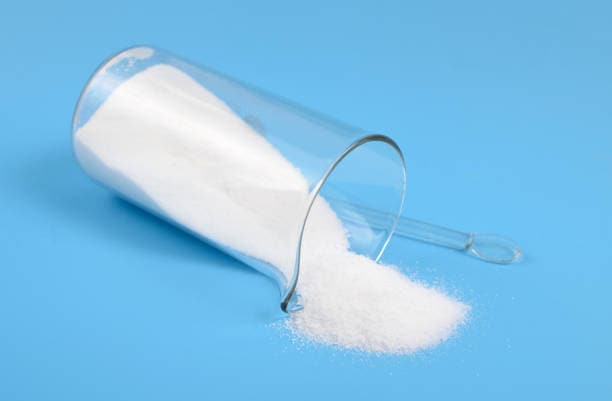
2. EDTA Mol Weight: The Dilution Red Flag
- EDTA 2Na: Molar mass ≈ 372.2 g/mol
- EDTA 4Na: Molar mass ≈ 452.2 g/mol (tetrahydrate) If a supplier’s “EDTA 4Na” has a mol weight near 370, it’s diluted with water or salts. This 10% discrepancy increases your usage by 15%.
3. EDTA pH: The Formula Breaker
- EDTA 2Na (pH 4–5): Safe for acid-sensitive products (e.g., shampoos).
- EDTA 4Na (pH 10–11): Ideal for alkaline processes (e.g., metal cleaning). Using the wrong type (e.g., EDTA 4Na in edta shampoo) breaks down surfactants, causing cloudiness and 5%+ returns.
Production Risk: A single impurity batch can scrap tons of finished goods.
The Purchasing Manager’s COA Checklist – 3 Non-Negotiables
Stop guessing. Demand these from suppliers befer you buy EDTA:
| COA Checkpoint | Why It Matters | Red Flag |
|---|---|---|
| 1. Chelation Value | Confirms active EDTA content (not inert fillers). Target: 220–240 mg CaCO₃/g. | Value < 200 mg CaCO₃/g |
| 2. Molar Mass & Formula | Verifies EDTA 2Na/4Na type and hydration level. | Mol weight 10% below standard |
| 3. Solution Clarity | Predicts finished product safety (e.g., edta toothpaste stability). | Cloudiness or particles in 10% solution |
Case Study: A toothpaste maker saved $500,000/year by rejecting suppliers whose EDTA failed COA clarity tests.
Industrial EDTA Procurement – The 3-Step Strategy for Cost & Quality
For 10,000-ton+ production, balance efficiency and risk with this approach:
Step 1: Lock the Technical Baseline
- Action: Require COAs with molar mass of EDTA and edta formula.
- Goal: Ensure you get true EDTA 2Na or 4Na—not diluted substitutes.
Step 2: Calculate True Cost per Ton of Finished Product
Use:

True Cost = (Addition Rate × Unit Price)
Example:
- 99% pure EDTA (15/kg): Addition rate = 10kg/ton → Cost =150/ton
- 97% pure EDTA (14/kg): Addition rate = 12kg/ton → Cost =168/ton
Result : “Cheaper” EDTA costs 12% more in practice.
Step 3: Shift Risk to Suppliers via Contract Clauses

- Requirement: Suppliers cover losses from EDTA-induced failures (e.g., edta toothpaste recalls).
- Outcome: Filters out low-quality vendors. One plant boosted pass rates from 95% to 99.5% with this.
Conclusion:
At Hoochemtec, our decades of experience in water treatment have taught us that the lowest EDTA price rarely leads to the lowest total cost. A 97% purity product may look like a deal, but the hidden 2% impurity gap forces you to use more chemicals to achieve the same results. These impurities often cause unexpected side reactions and scale buildup in your systems.
Efficient water treatment relies on the precise EDTA molecular weight and the concentration of the active chelating agent. We produce high-purity EDTA to ensure your chemical reactions remain predictable and your equipment stays protected. By choosing our certified quality, you reduce chemical waste and stabilize your operational budget. We believe that true value comes from performance, not just a low price tag. Let Hoochemtec help you optimize your process with chemicals you can trust.
Q&A of EDTA
A: EDTA 4Na should be ≈452 g/mol. If it’s 370 g/mol (like EDTA 2Na), you’re paying for water/impurities—adding 15% to your costs.
A: Yes. EDTA 4Na (pH 11) in shampoo (needs pH 5) degrades surfactants, causing cloudiness and 5%+ returns.
A: The value of EDTA lies in its unique ability to bind metal ions (chelation), solving critical industrial problems while optimizing costs.
A: Pour approximately 90 ml of distilled water into a 100 ml graduated cylinder. Rinse a 5 ml pipette with the undiluted solution, then add 5 ml of hydrochloric acid. Mix thoroughly. Then slowly add water until the final volume is 100 ml.
A: High EDTA refers to high-purity Ethylenediaminetetraacetic acid (EDTA), typically ≥99% pure