
Calcium hypochlorite is one of the most common shock disinfectants used in pool water treatment, but whether it raises pH remains a point of contention between operators and owners.
This article will delve into the chemical reaction principles to clearly answer this question and explore its cascading effects on total alkalinity, calcium hardness, and overall water balance. Readers will not only gain adjustment solutions directly applicable to daily maintenance but also understand the selection logic between dichlor and calcium hypochlorite.
Whether you want to prevent scale buildup in your equipment or maintain swimmer comfort, correctly understanding the chemical behavior of calcium hypochlorite is a crucial step in ensuring water safety and extending the life of your facilities.
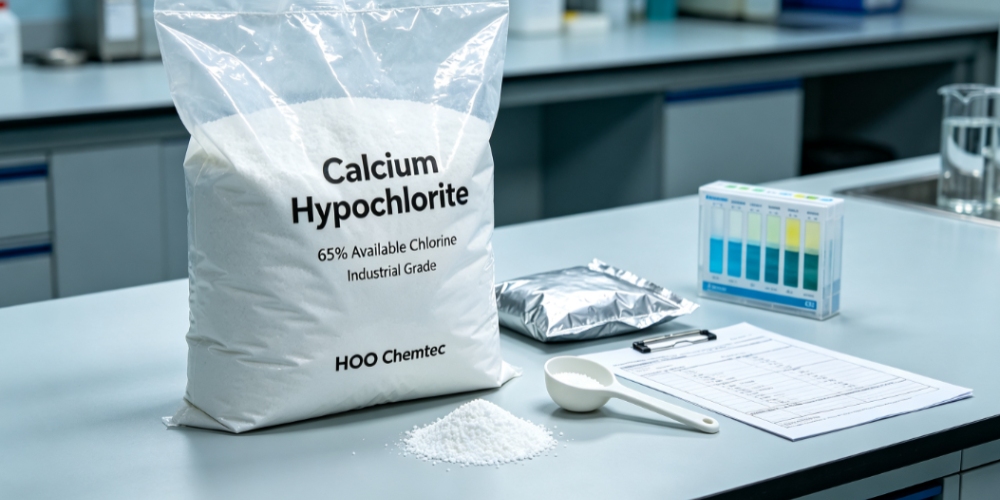
The Chemical Reaction Principle of Calcium Hypochlorite: Hydrolysis and the Formation of Disinfectant Components
Calcium hypochlorite undergoes hydrolysis upon dissolution. The main reaction is \(\boldsymbol{Ca(OCl)_2 + 2H_2O \rightarrow 2HOCl + Ca(OH)_2}\). This process simultaneously generates hypochlorous acid, which acts as a disinfectant, and highly alkaline calcium hydroxide.
Chemically, calcium hydroxide almost completely dissociates in water, which is the fundamental driving force behind the increase in water pH.
Key Byproducts Determining pH Trends
The large amount of hydroxide ions released from the decomposition of calcium hydroxide directly increases the alkalinity of the pool water. Industrial-grade calcium hypochlorite often contains trace amounts of free lime and calcium carbonate, which also contribute additional alkaline buffering.
According to practical application data, for every 1 mg/L of available chlorine added, the total alkalinity increases by approximately 0.5–0.8 mg/L (based on calcium carbonate).
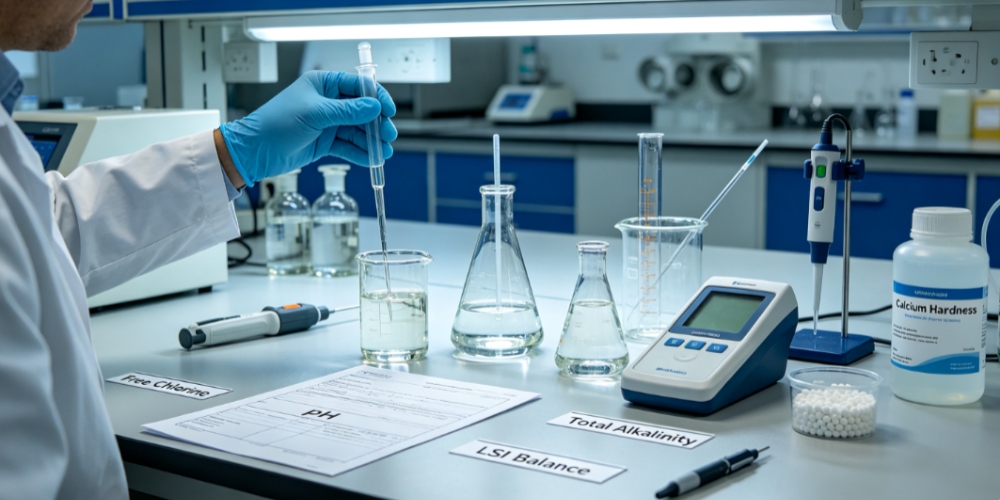
Why Does Calcium Hypochlorite Increase pH?
The Strong Alkaline Shock During the Initial Dissolution Phase
Upon initial addition, a high-concentration calcium hydroxide micro-zone forms around the granules or tablets, causing the local pH to spike instantly to above 9.0, which is highly detrimental to seals and heater elements.
Even after dilution through the circulation system, the overall pH of the pool will still rise by 0.2–0.5 units in a short period.
Acidic Replenishment and Net Effect During Chlorine Consumption Phase
As hypochlorous acid decomposes through the oxidation of organic matter or light exposure, the reaction \(\boldsymbol{HOCl \rightarrow HCl + [O]}\) releases trace amounts of hydrochloric acid, creating a reverse acidic pull.
However, field experience shows that the replenishment of acidic byproducts typically only offsets about 40%–60% of the initial alkalinity increase, with the overall pH still predominantly rising.
pH Effect Comparison Between Dichlor and Calcium Hypochlorite
Dichlor (sodium dichloroisocyanurate) dissolves in an acidic environment; for every 1 ppm of available chlorine provided, the pH decreases by approximately 0.1 units. Calcium hypochlorite, on the other hand, continuously releases alkalinity due to the calcium hydroxide.
Therefore, when the source water pH is high, dichlor is preferred to inhibit scaling. In acid rain areas or newly filled soft water tanks, the alkalinity of cal hypochlorite compensates for the natural tendency towards acidity. The table below clearly illustrates the core differences between the two.
| Comparison Dimensions | Dichlor (Sodium Dichloroisocyanurate) | Calcium Hypochlorite |
| pH Effect | Acidic, each ppm of available chlorine decreases pH by approximately 0.1. | Alkaline, each ppm of available chlorine increases pH (the magnitude is affected by TA buffering). |
| Effect on Cyanuric Acid (CYA) | Significantly increases (each ppm of chlorine increases CYA by approximately 0.9 ppm). | No effect, does not introduce CYA. |
| Effect on Calcium Hardness (CH) | No effect. | Each ppm of chlorine increases CH by approximately 0.8 ppm. |
| Applicable Scenarios | Routine disinfection for water sources with high pH, requiring control of calcium hardness and stabilization of CYA. | Shock treatment for water sources with low pH, excessively high CYA requiring replacement, and requiring simultaneous increase in hardness. |
| Product Form Examples | Granules, Tablets | Granules, Calcium Hypochlorite Tabs |
Based on the above changes, the specific impact of calcium hypochlorite on various water quality parameters can be referred to in the table below.
| Water Quality Parameter | Change Direction | Quantitative Reference (per 1 ppm increase in available chlorine) | Potential Risks |
| pH | Increase | Initially, it may exceed 9.0 locally, with an overall increase of 0.2–0.5 units in the pool. | Equipment corrosion, scale formation, swimmer discomfort |
| Total Alkalinity (TA) | Increase | Approximately 0.5–0.8 ppm (calculated as CaCO₃) | pH lock-in, difficulty in adjustment |
| Calcium Hardness (CH) | Increase | Approximately 0.8 ppm | Combined with high pH and high TA, it leads to LSI imbalance, accelerating scaling |
Actual Impact on Total Alkalinity (TA)
Pathway of Total Alkalinity Increase
Calcium hydroxide simultaneously introduces hydroxide ion alkalinity and subsequently absorbs bicarbonate ion alkalinity from carbon dioxide in the air, continuously pushing up total alkalinity.
A typical pattern is: for every 10 ppm increase in free chlorine, total alkalinity may increase by 8–12 ppm. For systems with high raw water hardness, total alkalinity (TA) can easily exceed the recommended upper limit of 120 ppm.
Chain problems caused by high TA: Excessive total alkalinity can make the pH exhibit “stubborn” characteristics, difficult to adjust even with acid addition, resulting in pH lock-in.
When high TA, high pH, and continuous calcium ion input are combined, the Langelier Saturation Index (LSI) rapidly shifts positive, leading to scale buildup on the heater surface.
We once handled an indoor constant temperature tank case where, due to long-term use of calcium hypochlorite alone and lack of monitoring, the heating pipe wall achieved a scale thickness of 3 mm within two months, resulting in a nearly 20% loss in thermal efficiency.
How to Balance Water Parameters After Using Calcium Hypochlorite
Immediate monitoring and step-by-step adjustment after addition: After initial addition and circulation for 6–8 hours, pH and TA should be tested immediately.
If the pH is higher than 7.8, hydrochloric acid or sodium bisulfate should be added in stages, with each adjustment controlled within 0.2 units.
The following adjustment steps can be directly applied to daily maintenance.
| Stage | Operation Steps | Key Control Points and Recommended Values |
| 1. Dosing | Dissolve tablets or granules using a dedicated dosing device and circulate thoroughly for 6–8 hours. | Ensure the circulation system covers the entire tank; do not add directly to the skimmer. |
| 2. Monitoring | Measure pH, TA, and CH using a reliable reagent kit or photometer. | Record the deviation between the original and target values. |
| 3. Lowering pH | If pH > 7.8, add hydrochloric acid (20%) or sodium bisulfate in several increments. | Each adjustment should be ≤0.2 units, with an interval ≥2 hours; for a 50 m³ tank, a 0.1 unit reduction requires approximately 150–250 mL of 20% hydrochloric acid. |
| 4. Adjusting TA | If TA > 120 ppm, implement the “acidification + strong aeration” process. | Lower the pH to 7.0–7.2, then aerate to allow CO₂ to escape, causing TA to decrease and pH to rise. |
| 5. Controlling CH | If CH approaches 400 ppm, partially drain the water and add fresh, low-hardness water. | Maintain LSI index between -0.3 and +0.3. |
| 6. Review | After treatment, conduct a comprehensive retest to confirm parameter stability. | Establish a log to track long-term trends. |
LSI Balance and Parameter Monitoring in Long-Term Maintenance
The ideal operating range is pH 7.4–7.6, TA 80–100 mg/L, and calcium hardness 200–300 mg/L. When calcium hardness approaches 400 mg/L due to continuous use of cal hypo, partially drain the water and introduce fresh water with low hardness.
For persistently high TA, a process of “adding dilute acid followed by strong aeration” can be used to promote CO₂ escape, thereby reducing total alkalinity without drastically lowering pH.
The table below provides the ideal range and risk thresholds for complete parameters and can be used as a daily reference.
| Parameter | Ideal Range | Warning/Action Threshold | Risk Consequences | |||
| pH | 7.4 – 7.6 | >7.8 or <7.2 | High pH causes scaling, low pH causes corrosion and irritates mucous membranes | |||
| Total Alkalinity (TA) | 80 – 120 ppm | >120 ppm or <60 ppm | Excessive TA leads to pH lock-in, excessively low TA leads to drastic pH fluctuations | |||
| Calcium Hardness (CH) | 200 – 300 ppm | >400 ppm or <150 ppm | High hardness causes scaling, low hardness corrodes concrete/metal | |||
| Cyanuric Acid (CYA) | 30 – 50 ppm | >100 ppm (significantly reduces chlorine efficiency) | Chlorine disinfection efficiency is greatly reduced, requiring water change | |||
| LSI Index | -0.3 to +0.3 | >+0.5 | Scaling; <-0.5 | Corrosion | Equipment damage, pool structure erosion | |
Calcium Hypochlorite Tabs: Usage Precautions and Typical Scenarios
Correct Dosing Method for Calcium Hypochlorite Tabs
While calcium hypochlorite tabs allow for slow chlorine release, they must never be added directly to the skimmer or pump basket. Localized accumulation of strong alkali and high heat will rapidly corrode pipes and seals.
The correct procedure is to use a dedicated flotation dosing device or a corrosion-resistant dissolving tank to allow the tablets to disintegrate evenly over several hours, distributing the pH increase pressure throughout the entire cycle.
Storage and Handling Guidelines from the Safety Data Sheet (SDS)
According to the calcium hypochlorite safety data sheet, this substance is a strong oxidizing agent and must be stored strictly away from oils, organic matter, and acids. In case of fire, only flood the area with plenty of water; dry powder or carbon dioxide fire extinguishers will accelerate the release of toxic chlorine gas.
Always wear safety goggles and dust gloves during handling. Use clean, dry tools. Reseal any unused portions immediately after opening. The table below summarizes the core safety requirements from the SDS.
| Safety Aspects | Core Requirements | Key Warnings Based on the Calcium Hypochlorite Safety Data Sheet |
| Storage | Cool, dry, well-ventilated, away from direct sunlight. | Strictly prohibit storage with acids, organic matter, oils, and reducing agents (such as trichloroisocyanuric acid). |
| Fire Emergency | Only flood with plenty of water. | Do not use dry powder or carbon dioxide fire extinguishers; contact will accelerate oxygen release and may cause an explosion. |
| Personal Protection | Wear goggles, dust mask, and nitrile gloves. | Avoid dust inhalation and skin contact; wash hands thoroughly with soap after handling. |
| Usage | Use a clean, dry, dedicated spoon. Seal the package immediately if not used up. | Avoid introducing moisture and contaminants; prevent localized heat release and chlorine generation. |
| Preparation | The tablet must be added to water; do not splash water onto the tablet. | Dissolve slowly to disperse heat and prevent boiling and splashing. |
Practical Application Scenarios and Product Selection
For outdoor competition pools with excessively high cyanuric acid (CYA), switching daily chlorination to cal hypochlorite shock can effectively cut off the continuous accumulation of CYA.
High-traffic wave pools are best suited for nighttime addition of cal hypochlorite, utilizing its slightly alkaline residual environment to stabilize free chlorine.
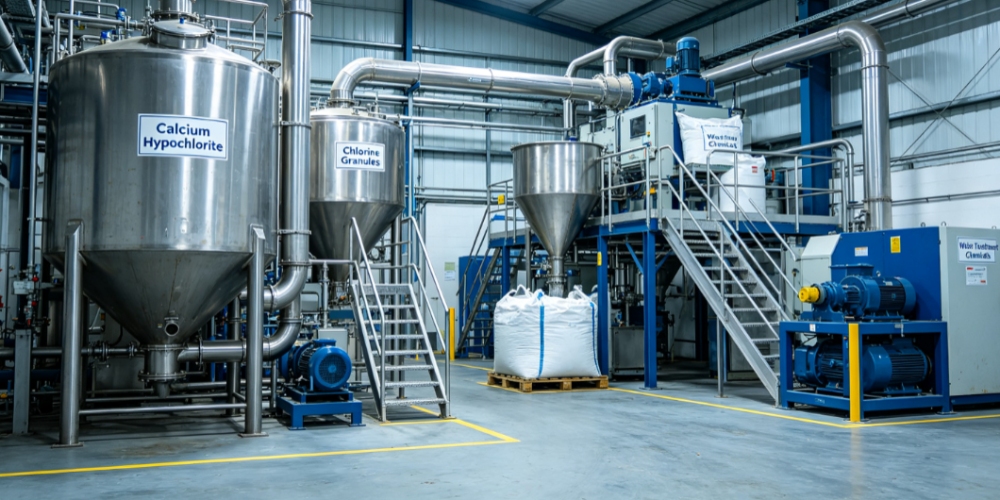
The quality of the calcium hypochlorite raw material directly determines the predictability and difficulty of pH fluctuations and adjustments. Professional manufacturers like HOO Chemtec provide operators with crucial quality assurance from the source.
Their calcium hypochlorite products use high-purity raw materials and advanced granulation and tableting processes, maintaining a stable available chlorine content of 65% or 70% or higher, with extremely low levels of free lime and inert impurities.
This means fewer side reactions during dissolution, significantly reducing the alkalinity introduced by impurities, and the increase in pH and total alkalinity is closer to theoretical predictions, reducing the time cost for operators to repeatedly add acid for trial and error.
HOO Chemtec’s calcium hypochlorite tabs have highly uniform density and consistent disintegration rates across batches, avoiding fluctuations in residual chlorine caused by tablet quality variations. This stability is particularly crucial for demanding commercial competition pools and therapeutic spas.
Furthermore, its industrial-grade packaging offers excellent moisture protection and includes clear SDS guidelines, allowing maintenance teams to focus on overall water quality control rather than constantly worrying about uncontrollable factors related to the agent itself.
Conclusion
Calcium hypochlorite, by hydrolyzing to form calcium hydroxide, does indeed raise the pool’s pH, simultaneously increasing total alkalinity and calcium hardness. However, this effect is entirely predictable and manageable.
By consistently adhering to post-dosing testing, phased acidification, strict monitoring of the LSI index, and flexibly employing a combination strategy of dichlor vs. calcium hypochlorite based on actual water quality, the so-called “alkaline side effect” can be transformed into a beneficial tool for balancing hardness.
Strictly adhering to the safety procedures in the calcium hypochlorite safety data sheet and using calcium hypochlorite tabs correctly can achieve truly efficient and economical pool disinfection while ensuring the safety of personnel and equipment.
How does calcium hypochlorite affect other pool water parameters?
Besides increasing pH, calcium hypochlorite also raises total alkalinity and calcium hardness. For every 1 ppm increase in available chlorine, total alkalinity may increase by approximately 0.5–0.8 ppm and calcium hardness by about 0.8 ppm, which may increase scaling risks if not monitored.
Does calcium hypochlorite increase pool pH and alkalinity?
Yes. When calcium hypochlorite dissolves in water, it produces hypochlorous acid for disinfection and calcium hydroxide, which releases hydroxide ions and increases both pH and total alkalinity. This alkaline effect is the main reason pH rises after using calcium hypochlorite.
How can pool operators maintain water balance after using calcium hypochlorite?
Operators should test pH, total alkalinity, and calcium hardness after dosing and circulation. If pH rises above 7.8, add acid gradually for adjustment, while maintaining proper LSI balance to prevent scale formation and protect pool equipment.


